
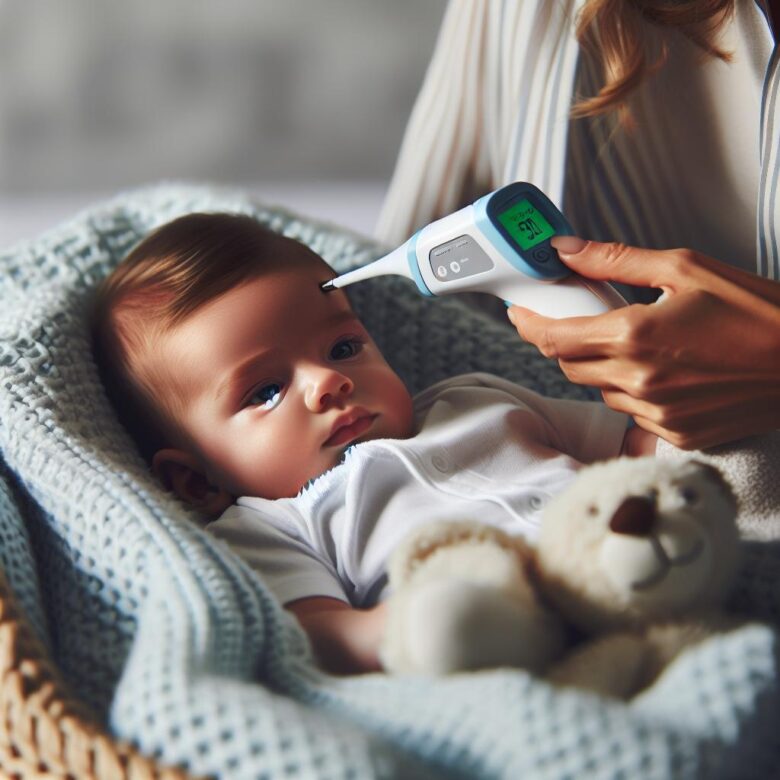
A baby’s fever can spike fast-then parents lose precious time guessing what’s “normal” and what’s an emergency. The wrong move can mean dehydration, missed warning signs, or a middle-of-the-night ER bill you didn’t need.
As a clinician who has triaged countless infant fever calls, I’ve seen the same pattern: families focus on the number, while the real risk is age, symptoms, and hydration status. Fever itself is often a helpful immune response-but in young babies it can also be the first clue to a serious infection.
This article gives you a clear at-home plan: when to check temperature, safe comfort steps, correct dosing basics, and the exact red flags that mean “call now” or “go now.”
Baby Fever Home Care Checklist: Accurate Temperature Taking, Hydration Targets, and Comfort Measures That Work
Most dosing errors start with bad temperature technique: a 1°C (1.8°F) swing from an under-inserted rectal thermometer can change whether a fever is “watch” or “treat.” Use one method consistently-rectal for infants <3 months is the reference standard; avoid forehead strips for decisions.
| Task | Target/How | Frequency |
|---|---|---|
| Accurate temperature | Rectal digital thermometer: lubricate tip, insert 1.25-2.5 cm (½-1 in), hold until beep; log in Huckleberry to spot trends | Every 4-6 hrs, or sooner if behavior worsens |
| Hydration targets | Breast/formula on demand; goal urine: at least 4-6 wet diapers/24 hrs, pale yellow; offer 5-10 mL oral rehydration solution every 5 min if vomiting | Continuously; reassess output each feed |
| Comfort measures | Light layers, room 20-22°C (68-72°F), tepid sponge only for overheating, not “to chase the number”; prioritize sleep and skin-to-skin | As needed; re-check after 30-60 min |
Field Note: In clinic, we’ve repeatedly traced “persistent fevers” to parents alternating axillary and temporal readings-once they standardized to rectal and logged times/values, the apparent spikes disappeared and the care plan simplified.
Infant Fever Medication Safety: Correct Acetaminophen/Ibuprofen Dosing by Weight, Timing Rules, and Common Mistakes to Avoid
Most infant medication dosing errors happen because caregivers dose by age or by the wrong concentration-double-dosing is a common ER trigger. Always calculate by current weight (kg), use an oral syringe, and verify product strength before each dose.
| Medication | Weight-based dose | Timing & key safety rules |
|---|---|---|
| Acetaminophen | 10-15 mg/kg per dose | Every 4-6 hours as needed; do not exceed 5 doses/24h; avoid “combo” cold products that also contain acetaminophen. |
| Ibuprofen | 5-10 mg/kg per dose | Every 6-8 hours as needed; do not exceed 4 doses/24h; generally avoid under 6 months unless directed by a clinician; avoid with dehydration/vomiting or kidney disease risk. |
| Common mistakes | – | Mixing infant/children’s concentrations, using a kitchen spoon, “stacking” doses from multiple caregivers, or alternating meds without a written schedule (use Epocrates or a medication log). |
Field Note: I’ve seen fevers “not responding” vanish once we learned the infant was getting 2.5 mL of the wrong-strength acetaminophen every 3 hours-switching to mg/kg with a single shared dosing chart fixed it immediately.
When a Baby’s Fever Is an Emergency: Red-Flag Symptoms, Age-Based Thresholds (Under 3 Months vs. Older), and What to Tell the Pediatrician
Missing an emergency fever in a newborn usually isn’t about the number-it’s ignoring age-based thresholds and red-flag symptoms. Infants can look “just warm” while serious bacterial infection is still on the table.
| Age | Emergency Fever Threshold | Act Now If Any Red Flags |
|---|---|---|
| Under 3 months | Rectal temperature ≥38.0°C (100.4°F) | Poor feeding, lethargy, irritability/inconsolable crying, breathing difficulty, bluish color, bulging/tense fontanelle, seizure, new rash (especially purple/petechiae), fewer wet diapers |
| 3 months and older | ≥39.0°C (102.2°F) or any fever lasting >24-48 hours (age-dependent) | Dehydration, stiff neck, persistent vomiting, severe pain, confusion, trouble breathing, non-blanching rash, seizure, fever after heat exposure, or immunocompromised status |
Call your pediatrician or seek urgent care and report: how you measured the temperature (rectal/temporal), the highest reading and time, medications/doses given, feeding and urine output, breathing, rash, exposure history, and vaccine/medical conditions; tracking this in Huckleberry makes timelines and dose intervals accurate. Field Note: I’ve seen triage change from “monitor at home” to immediate ED once parents clarified “rectal 38.0°C in a 6-week-old” plus only one wet diaper logged overnight.
Q&A
FAQ 1: When is a baby’s fever an emergency, and when should I call the doctor?
Answer: Seek urgent medical care if your baby is:
- Under 3 months with a rectal temperature ≥ 100.4°F (38.0°C) (same-day emergency evaluation is recommended).
- 3-6 months with fever ≥ 102°F (38.9°C), or any fever with concerning symptoms.
- Any age with trouble breathing, bluish lips/skin, seizure, severe lethargy/unresponsiveness, stiff neck, a non-blanching rash (purple/red spots that don’t fade when pressed), signs of dehydration (very dry mouth, no tears, markedly fewer wet diapers), persistent vomiting, or a bulging sunken soft spot with illness concerns.
- Fever lasting > 24 hours in babies under 2 years (or > 3 days in older infants), or if your instincts say something is wrong.
FAQ 2: What’s the safest way to take my baby’s temperature, and what number counts as a fever?
Answer: Use the method best supported for your child’s age.
|
Age |
Best method (home) |
Fever threshold |
|---|---|---|
|
0-3 months |
Rectal digital thermometer (most accurate) |
≥ 100.4°F (38.0°C) |
|
3 months-4 years |
Rectal (most accurate) or axillary (armpit) as a screening method; confirm if needed |
≥ 100.4°F (38.0°C) rectal; armpit readings can run lower |
|
4+ years |
Oral (if reliable) or tympanic (ear) if used correctly |
≥ 100.4°F (38.0°C) |
Key accuracy tips: Avoid relying on forehead “strip” thermometers. Temporal artery (forehead scan) thermometers can be convenient but may be less reliable in young infants; if the reading is high or doesn’t match how your baby looks, confirm with a rectal temperature (especially under 3 months).
FAQ 3: Can I treat the fever at home with medicine, and what else helps safely?
Answer: Treat the discomfort (poor feeding, significant fussiness, trouble sleeping), not just the number. Safe home steps include:
- Fluids and feeding: Offer breast milk/formula more frequently. Fever increases fluid needs; aim for normal urine output (regular wet diapers).
- Comfort measures: Dress in light clothing, keep the room comfortably cool, and avoid overheating (heavy blankets, hot rooms).
- Medication (if needed):
- Acetaminophen can be used for many babies; dose is based on weight. Follow your pediatrician’s guidance or the product label for your child’s weight.
- Ibuprofen is generally for babies 6 months and older; dose by weight.
- Do not use aspirin in children (risk of Reye syndrome).
- Do not alternate medicines (acetaminophen/ibuprofen) unless specifically instructed by your clinician; it increases dosing errors.
- Avoid unsafe fever “treatments”: No ice baths, cold-water immersion, or rubbing alcohol. A lukewarm sponge bath is rarely necessary and can cause shivering (which may raise temperature).
Safety check: If your baby has chronic medical conditions, was born premature, is on other medications, or you’re unsure of the correct dose, contact your pediatrician before giving fever reducers.
Wrapping Up: How to Safely Treat a Baby’s Fever at Home Insights
Pro Tip: The biggest mistake I still see is “stacking” fever reducers-mixing acetaminophen and ibuprofen (or using combination cold medicines) without a written schedule. That’s how accidental overdoses happen, especially when sleep-deprived caregivers swap shifts.
Close this tab and do one thing now: create a one-page fever note for your fridge or phone with your baby’s current weight, the exact product name/strength you own, and a time-stamped dosing log template.
If your baby is under 3 months with any fever, seems unusually sleepy, has trouble breathing, a stiff neck, a purple rash, dehydration signs, or you can’t keep fluids down, treat it as urgent-call your pediatrician or seek emergency care.

Dr. Julian Sterling is a licensed Veterinarian with over 15 years of clinical experience. Specializing in small animal internal medicine and nutrition, Dr. Sterling dedicated his career to helping pet parents navigate complex health choices. At SemiZoo, he translates veterinary science into actionable advice for a happier, healthier pet life.